How to Clean Rain Stained Glass Windows Effectively By Gator
How to Clean Rain Stained Glass Windows Effectively By Gator In recent weeks, the UAE has experienced unusually heavy rainfall and storms, especially across Dubai
A practical guide for facility managers, procurement teams, and business owners — covering capacity, materials, segregation, placement, and sustainability across Dubai and the wider UAE.
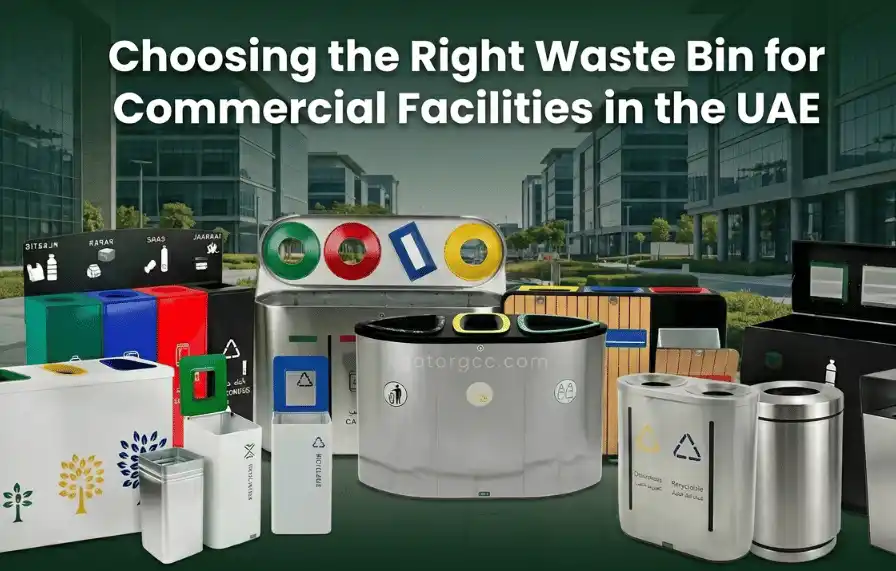
Effective waste management is a critical part of maintaining clean, safe, and professional commercial environments across Dubai and the UAE. From office towers and shopping malls to industrial facilities and hospitality venues, selecting the right waste disposal system directly impacts hygiene, operational efficiency, sustainability goals, and regulatory compliance.
As Dubai continues to expand its infrastructure and sustainability initiatives, businesses are investing in commercial waste solutions that support responsible waste handling and recycling practices. Choosing the correct bin is not simply about collecting waste — it involves evaluating capacity, material durability, segregation requirements, placement, maintenance needs, and local environmental conditions.
“Choosing the correct bin is not simply about collecting waste. It involves evaluating capacity, material durability, waste segregation requirements, placement, maintenance needs, and environmental conditions.”
For facility managers, procurement teams, and business owners, understanding how to select the right waste bin can reduce operational costs, improve workplace cleanliness, and enhance customer experiences.
Every commercial facility generates different waste streams. Before selecting a bin, a detailed waste audit helps determine which types and capacities are appropriate for your setting.
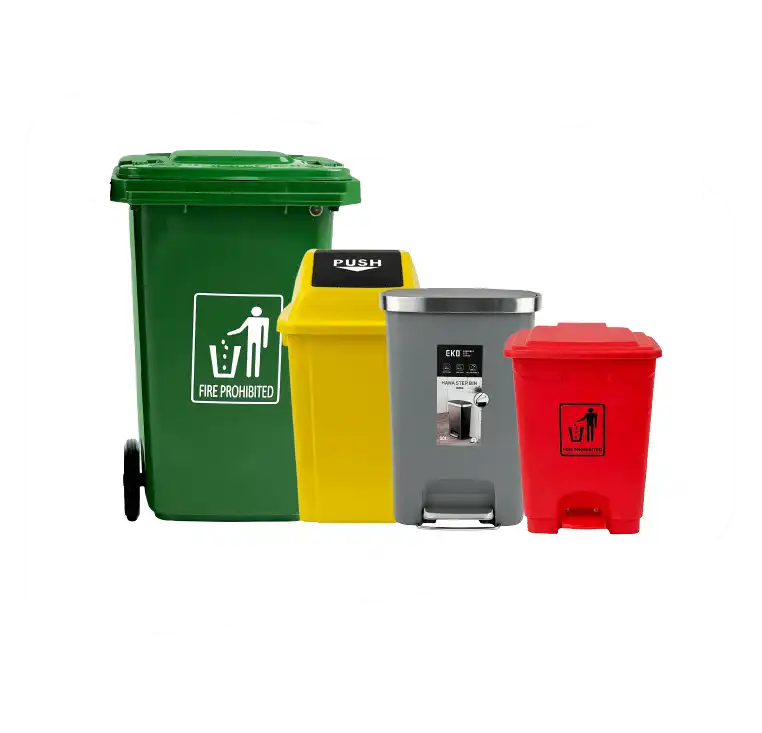
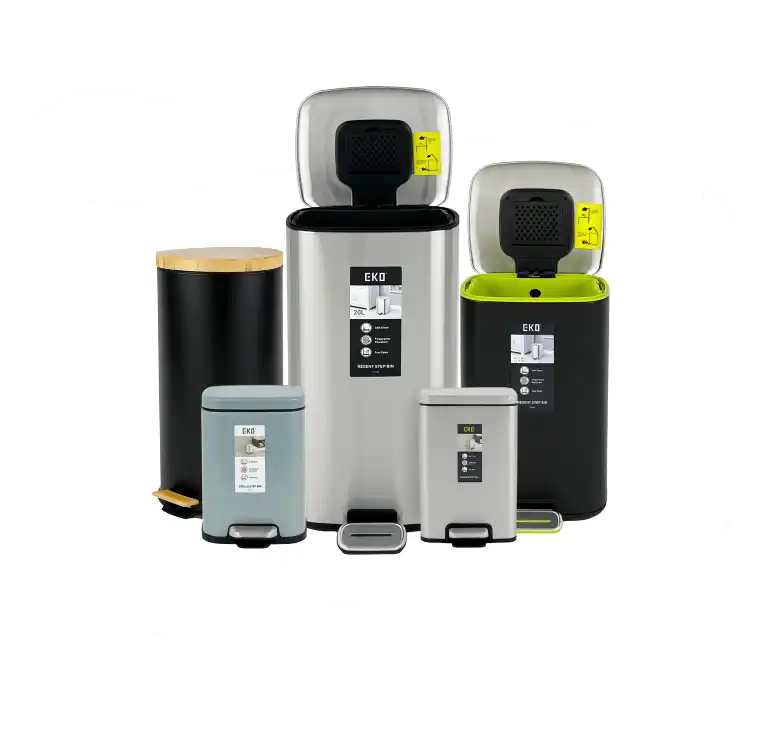
Lightweight, corrosion-resistant, and cost-effective. Suitable for offices, schools, healthcare facilities, warehouses, and retail environments. Available in a wide range of capacities.
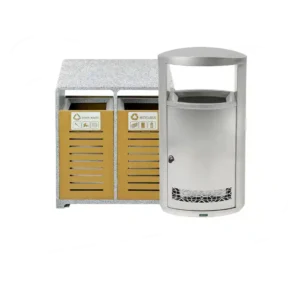
Engineered to withstand heat, UV exposure, dust, and rain common in Dubai and the UAE. Ideal for parks, parking areas, shopping centres, hotels, and transport hubs
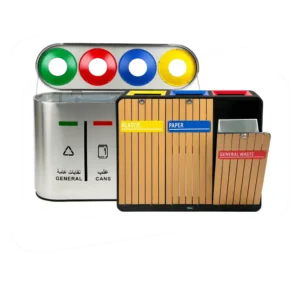
Purpose-built for waste segregation. Colour-coded systems simplify compliance and increase participation rates across offices, schools, and commercial complexes.
Built for demanding environments with higher waste volumes. Used across manufacturing, logistics, warehousing, construction, and oil and gas support facilities.
Organisations increasingly adopt waste separation programmes to improve sustainability performance. A consistent colour-coding system reduces contamination and makes recycling participation intuitive for employees and visitors alike.
| Waste Type | Suggested Bin Colour | Common Sources |
|---|---|---|
| General Waste |
Black
|
Mixed non-recyclable waste |
| Plastic |
Yellow
|
Bottles, packaging, film |
| Paper & Cardboard |
Blue
|
Documents, boxes, newspapers |
| Glass |
Green
|
Bottles, jars, containers |
| Organic Waste |
Brown
|
Food scraps, compostable material |
Clear labelling improves participation rates and significantly reduces contamination in recycling streams.
A systematic approach to bin selection prevents undersizing, wasted budget, and poor placement decisions. Work through the following considerations before specifying any product.
Evaluate building size, occupancy levels, waste generation patterns, and collection schedules. This determines accurate sizing and the number of collection points needed.
Plastic remains the preferred choice for most commercial applications due to its durability, affordability, and ease of maintenance. Metal may be appropriate for specialised industrial settings.
Common commercial capacities range from 50L to 1100L. Matching capacity to actual waste volume prevents overflow and reduces unnecessary collection frequency.
Wheeled bins simplify collection and transportation for high-volume facilities. Prioritise designs that are easy to clean, resistant to staining, and compatible with your cleaning protocols.
Low-cost bins may require frequent replacement, increasing long-term expenditure. Total cost of ownership matters more than unit price.
Undersized bins lead to overflow, poor facility appearance, and higher cleaning costs. A simple waste audit prevents this.
Bins positioned too far from users reduce compliance. Proximity to waste generation points is the single biggest driver of usage.
Failure to separate recyclable materials increases disposal costs and undermines sustainability objectives and ESG reporting.
Standard indoor bins degrade quickly under UAE sun exposure and dust. Outdoor environments require UV-resistant, weather-resistant construction.
Even the best waste management system requires user participation. Brief, regular awareness keeps segregation rates high.
Virtually every commercial sector in the UAE benefits from a properly specified waste management system. The requirements differ — a hotel prioritises presentation and guest experience, while a warehouse prioritises high-capacity, robust containers — but the underlying principles of capacity, placement, and segregation remain constant.
Many organisations now integrate waste management decisions into broader Environmental, Social, and Governance (ESG) initiatives — choosing bin types, materials, and placement strategies that align with annual sustainability reporting.
What type of waste bin is best for commercial facilities?
The best option depends on waste volume, location, waste type, and collection frequency. Most commercial facilities use a combination of general waste, recycling, and outdoor bins rather than a single solution.
How many waste bins does a commercial building need?
This depends on occupancy levels, facility size, and waste generation patterns. A waste audit provides the most accurate estimate — as a rough guide, place a bin within 10–15 metres of any regular waste generation point.
Are recycling bins necessary for businesses in Dubai?
Yes. Recycling supports sustainability objectives and helps organisations reduce landfill waste while improving environmental performance — an increasingly important factor for corporate tenants and government contracts.
What size waste bin should a warehouse use?
Warehouses typically require larger capacities ranging from 240L to 1100L depending on operational volume, packaging type, and collection schedule.
What makes outdoor bins suitable for the UAE climate?
Bins designed for UAE outdoor use are constructed from UV-stabilised, weather-resistant materials that resist fading, warping, and structural degradation under sustained heat and direct sunlight.
Explore Gator Global’s full range of plastic bins, outdoor bins, and recycling stations — designed for UAE conditions.
Selecting the right waste bin solution is an essential investment for commercial facilities seeking higher standards of cleanliness, safety, sustainability, and operational efficiency. Whether you operate an office building, hotel, warehouse, shopping centre, healthcare facility, or industrial site, choosing the correct waste management equipment can measurably improve daily operations and support long-term environmental goals.
Businesses across Dubai increasingly prioritise professional waste management solutions that align with sustainability initiatives, regulatory requirements, and customer expectations. By evaluating waste volume, facility requirements, durability needs, and recycling objectives, organisations can implement systems that deliver genuine, measurable value — not just a bin in a corner.

How to Clean Rain Stained Glass Windows Effectively By Gator In recent weeks, the UAE has experienced unusually heavy rainfall and storms, especially across Dubai

Ramadan Special Cleaning Guide During UAE Holidays Ramadan is a holy and peaceful month across the UAE. It is a time for fasting, prayer, family

Gator Best escalator cleaning machines available in UAE. The story usually begins after closing time. The mall is quiet, lights are dim, and the escalators

Best Floor Grinder Machine Available in UAE: Which One Suits Your Needs? If you have ever faced uneven floors, stubborn coatings, or rough concrete, you